
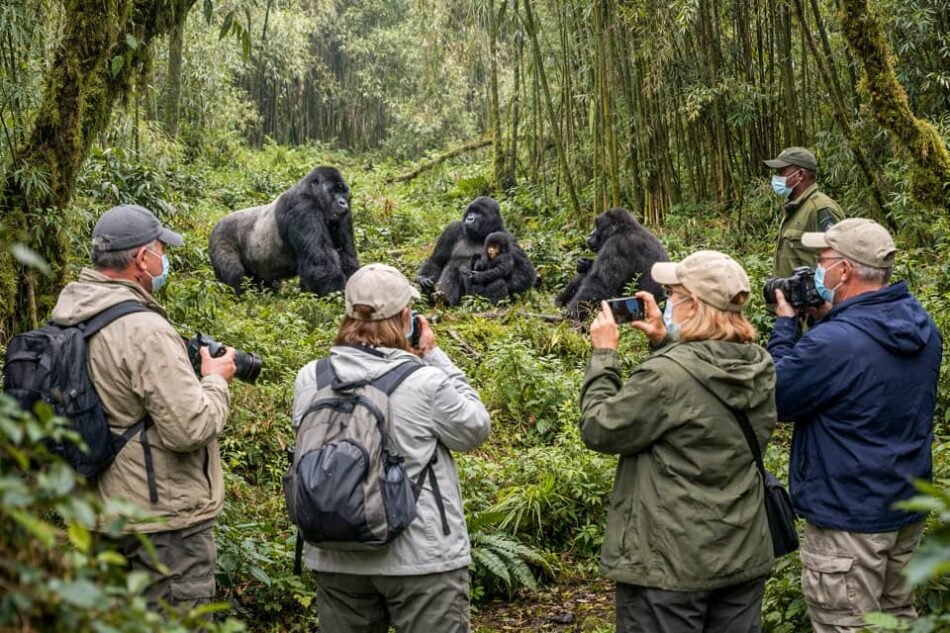
There’s a particular kind of silence that settles over you the moment a ranger raises a fist and the group stops moving. Somewhere just ahead, through a wall of vines and wet leaves, a 400-pound silverback is going about his morning. Gorilla trekking in Rwanda’s Volcanoes National Park is built around that single moment, and almost everything else — the permit, the paperwork, the early wake-up call — exists to get you there safely and responsibly. If you’re trying to make sense of how the permit system actually works before you commit to a trip, here’s what you need to know.
What a Gorilla Trekking Permit Actually Covers
A gorilla trekking permit is issued by the Rwanda Development Board (RDB), the government body that manages tourism and conservation in Rwanda, and it’s your legal entry ticket into Volcanoes National Park for one day of trekking. It covers park entry, an assigned ranger guide and tracker team, and — once your group locates its gorilla family — one hour in their presence. It does not include transport, accommodation, porter fees, or guide tips, all of which you’ll budget for separately.
Volcanoes National Park sits in Musanze District in Rwanda’s Northern Province, part of the Virunga Massif that it shares with Uganda and the Democratic Republic of Congo. Around a dozen gorilla families are currently habituated for tourism there, each one tracked daily by park staff who know roughly where they slept the night before.
How Much a Permit Costs in 2026
The standard rate for international visitors is $1,500 per person, and that figure has held steady for 2026. What’s changed is the pricing for Rwandan, East African Community, and other African travelers. In a notice issued on 5 January 2026, RDB confirmed promotional rates of $200 for Rwandan and EAC citizens and $500 for other African citizens and residents, a discount structure it has run on and off since 2020. There’s one catch worth knowing before you plan around it: those promotional rates don’t apply between June and October, which is peak gorilla trekking season, when standard pricing resumes.
If you’re a foreign resident of Rwanda rather than an EAC or African citizen, you’ll typically fall into a separate resident rate rather than the full international price, so it’s worth confirming your exact category directly with RDB or a licensed operator before you pay.
How and When to Book
You can book a permit two ways: directly through RDB (including via Irembo, Rwanda’s government services platform) or through a licensed tour operator, who will usually handle the booking as part of a wider package. Going direct saves on operator fees if you’re organizing your own transport and lodging; going through an operator is usually easier if this is your only reason for visiting Rwanda and you’d rather not coordinate logistics yourself.
Only around 80 permits are issued per day across all habituated families, split into groups of a maximum of eight people per family. That cap exists for the gorillas’ sake — smaller groups mean less stress and lower disease-transmission risk — but it also means permits for the June–October peak season can sell out months in advance. Most operators recommend booking three to six months ahead for regular season dates, and closer to nine to twelve months out if you’re set on a specific date during peak season or over a major holiday.
What Trekking Day Actually Looks Like
Trekking days start early. Most visitors are picked up from their lodge around 6:30 a.m. for the drive to park headquarters in Kinigi, where briefings begin at 7 a.m. Rangers assign each group to a specific gorilla family based on fitness level, health, and how far that family was last seen from the trailhead — so if you mention a knee issue or limited hiking experience during the briefing, it genuinely affects your assignment, not just out of courtesy.
From there, trek times vary enormously. Some families are a 90-minute walk from the road; others take up to six hours of climbing through dense, often muddy forest at altitude. Once you find your assigned family, you get exactly one hour with them, watched over by your guide and an armed ranger escort (a standard precaution in and around the park, not a reflection of any real danger from the gorillas themselves).
Rules Every Trekker Needs to Know
The rules around gorilla trekking aren’t bureaucratic box-ticking — they exist because mountain gorillas share roughly 98% of human DNA and can catch human respiratory illnesses with serious consequences for the group. The ones that matter most:
- You must be at least 15 years old to trek.
- If you’re feeling sick — even just a cold — you’ll be asked not to trek, for the gorillas’ protection as much as your own experience.
- Keep a minimum distance from the gorillas at all times (rangers typically enforce somewhere around 7 meters), and never attempt to touch them.
- Flash photography is not allowed.
- Whatever you carry in, you carry out — no litter left in the park.
Rangers do check identification (passport or, for Rwandan and EAC nationals, a national ID) before you head into the forest, so bring the right documents on the day, not just your permit confirmation.
A Few Practical Tips
Hire a porter at the trailhead if you can. It typically costs around $15, the porters are drawn from communities living around the park, and they genuinely help on the steeper, muddier sections — this is one of those cases where the “optional” add-on is worth it for most people, not just a tourist upsell. Pack for mud and nettles regardless of the season: sturdy, broken-in hiking boots, a long-sleeved shirt, gardening-style gloves, and a rain jacket. Trekking poles help on the way down more than the way up. And budget for tips — a common guideline is around $15 for porters and $5–10 per person for guides and trackers, paid at the end of the day.
Planning the Rest of Your Trip
Most travelers base themselves in or near Kinigi the night before and after their trek, since the early start makes a drive up from Kigali impractical. If you’re looking for somewhere to eat nearby once you’re off the mountain, Kinigi Table is right there in the park’s home village. For arranging permits, transport, and the rest of your itinerary, it’s worth comparing a few licensed tour operators in Rwanda rather than booking with the first one you find — pricing and what’s included in a “package” can vary more than people expect.
However you plan it, a gorilla trekking permit is the one line item in a Rwanda trip that’s genuinely worth building your entire schedule around. Everything else — the park rules, the early mornings, the muddy boots — is just the price of admission to an hour you’ll likely still be describing to people years later.
Sources
- KT Press — Rwanda Floats Promotional Gorilla Trekking Rates Into 2026 (January 2026)
- AllAfrica — Rwanda: Promotional Rates for Gorilla Trekking Extended (January 2026)
- Discover Africa — Seven Things You Should Know Before Travelling to Volcanoes National Park
- Southern Destinations — Gorilla Trekking FAQs, Volcanoes National Park